Is a GaN Charger Worth It? 5 Myths Busted + a Simple Buying Checklist for 2026
GaN chargers are hyped everywhere — but hype isn’t a buying strategy. Here is what’s true, what’s marketing, and the 5 questions that pick the right charger for you.
Browse UGREEN GaN Chargers by Wattage →

Open any shopping app today and “GaN” is plastered across half the chargers. Scroll reviews and everyone swears GaN is the greatest thing since sliced bread. Skip it and you feel like you’re living in the past.
Here’s the honest take after comparing today’s charger options across specs, reviews and hands-on reports: GaN is genuinely good — but it is also overhyped. Not everyone needs it, and not everything stamped “GaN” deserves your money. Before you buy, here are the myths to ignore and the questions to actually ask.
In this guide
Myth 1: “GaN chargers charge faster”
This is the most common misunderstanding. Charging speed comes from wattage and the fast-charge protocol your device and charger agree on — not from the semiconductor inside. A 20 W GaN charger will never beat a 45 W silicon charger. GaN’s real superpowers are size and heat: same wattage in a much smaller, cooler body.
Myth 2: “If it says GaN, it’s a good charger”
The word “GaN” has been cheapened by a flood of lookalikes. Some budget “GaN” units are really silicon designs with a GaN sticker. Others swap in one GaN component and leave the rest silicon. And a few simply exaggerate wattage, protocols or thermal performance on the box. Buy the brand, not the badge.
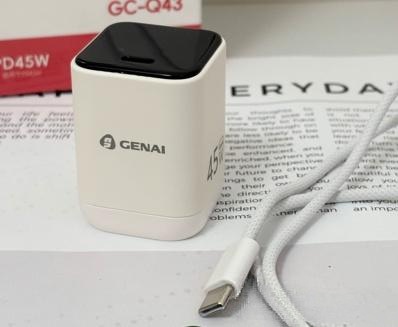
Myth 3: “Higher wattage is always better”
Go big or go home — right? Not with chargers. Consider: an iPhone peaks around 27 W. Give it a 90 W charger and 60+ watts simply never get used. Meanwhile that big wattage shows up as a bigger, heavier, pricier brick that 90% of your week doesn’t need. Match the charger to your gear; don’t future-proof into a brick.
The “realistic wattage” rule
Phone only → 20–30 W is plenty. Phone + tablet + ultrabook → 45–65 W covers almost everyone. Gaming laptop or heavy creator rig → 100 W+.
Question 1: What wattage do your devices actually need?
Sit down and list everything you charge. For most people that’s a phone, a tablet and a thin laptop — and 45–65 W handles the whole set. If you never charge a laptop from the wall brick, a 30–45 W charger saves money and space for zero practical loss.
| Your setup | Sweet spot | Best form factor |
|---|---|---|
| Phone only | 20–30 W | Tiny single-port cube |
| Phone + tablet + ultrabook | 45–65 W | Compact 2–3 port |
| Laptop-heavy desk / creator | 100 W+ | Multi-port station |
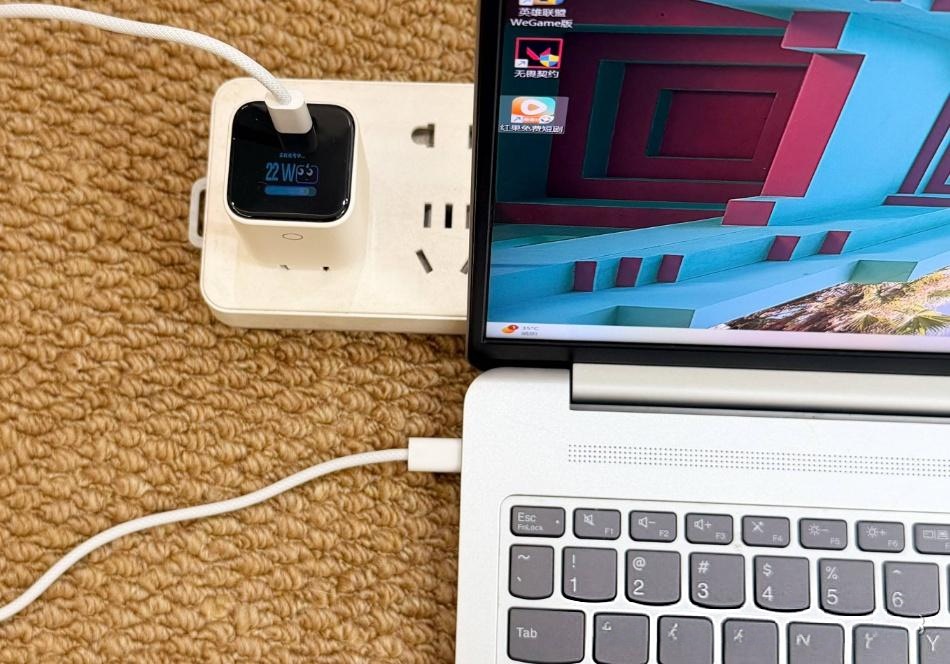
Question 2: Single port or multiple ports?
Single-port chargers are smaller, cheaper and rock-solid — perfect when devices charge one after another. Multi-port chargers charge several devices at once, but cost more, take more space, and split their power budget between ports. Honest question: do you really charge two devices at the same time? For most of us the answer is “rarely” — and a great single-port GaN charger beats a mediocre multi-port one.
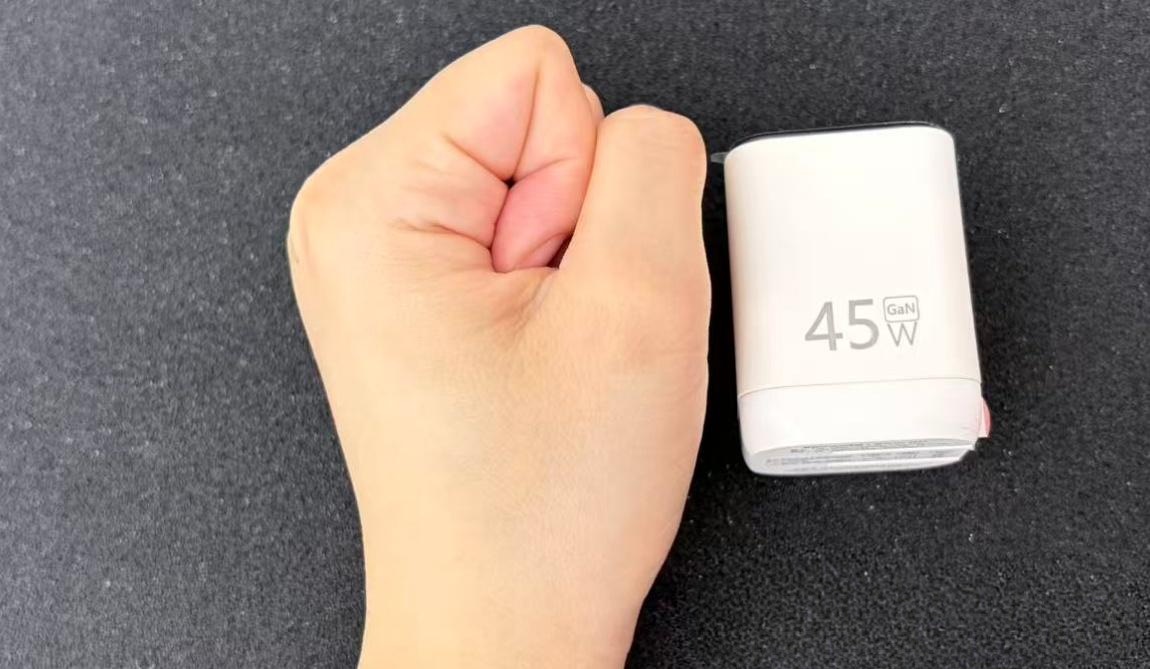
Question 3: How much do you value portability?
Portability is GaN’s home turf, but not every GaN charger is equally pocketable:
- 45 W single-port: ~80 g region — pocketable, disappears in a backpack.
- 65 W dual-port: ~100–120 g — pocketable but you notice it.
- 90 W+ multi-port: 150 g+ — this is bag or desk territory.
Take it everywhere → lean small. Park it on a desk → size matters less and wattage/ports matter more.
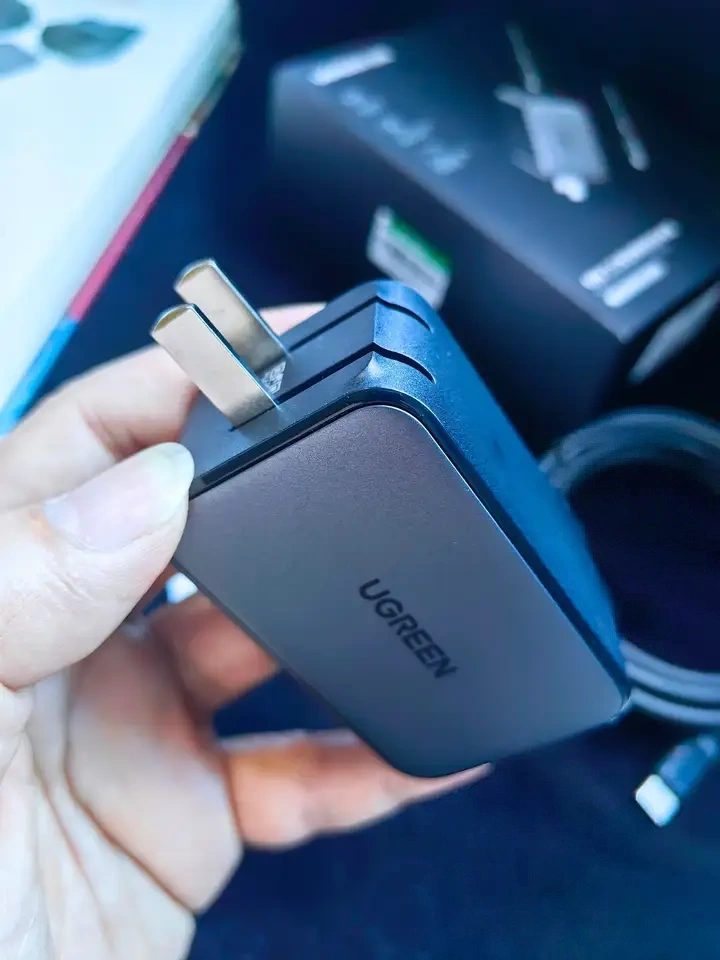
The 5-point buying checklist
- Real GaN, not label GaN — buy from established brands that spec their parts honestly.
- Enough watts, not extra watts — 45 W is the sweet spot for most; bigger only if gear demands it.
- Active cooling if you can get it — pre-emptive temperature management feels like a different class of product.
- Full protocol support — PD, PPS, SCP, AFC, QC: iPhones, Androids and everything between.
- Safety certification — UL/ETL/FCC (or your region’s equivalent). No mark, no sale.
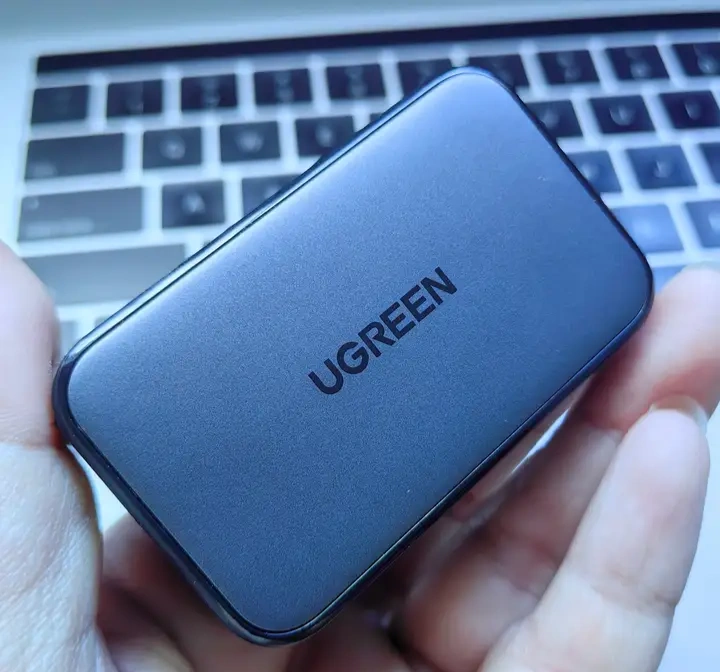
Find Your UGREEN GaN Charger Match →
UGREEN’s lineup spans 30W pocket cubes to 100W+ desk stations — filter by your wattage and port needs.
Frequently asked questions
Is 45W enough for most people?
Yes. A 45 W GaN charger fast-charges phones and tablets and tops up most thin-and-light ultrabooks. It’s widely considered the “golden” wattage for travel because it covers the daily device set without excess bulk.
How do I spot a fake GaN charger?
Buy from reputable brands and sellers, avoid prices that are impossibly low for the rated wattage, verify safety certifications, and check independent reviews. If a 120 W charger costs less than a coffee, it’s not a real 120 W GaN charger.
What wattage does an iPhone need?
Modern iPhones peak around 27 W, so a 30 W charger is a comfortable ceiling and 45 W leaves generous headroom while still serving tablets and small laptops.
Is multi-port always better than single-port?
Only if you genuinely charge several devices simultaneously. Otherwise a single-port charger is smaller, cheaper and simpler, with no power-sharing compromises.
Where to start
If you’ve worked through the checklist, a great place to begin is UGREEN’s GaN range — real third-generation GaN across all three form factors above, sensible wattage tiers, full protocol support and proper safety certification:
- Read our full UGREEN 65W GaN charger review (the travel sweet spot)
- Read our full UGREEN 160W 5-port review (the desk solution)
GaN chargers aren’t magic and they’re not for everyone — but for most people who charge more than one device, one good GaN charger quietly removes a surprising amount of daily friction.